If you run a small business in Britain, someone has probably told you that you “need to be on social media”. Nobody mentioned which platform, what to post, or how to tell if it’s working. So you post a few times, get three likes (one from a relative), and quietly stop.
This guide fixes that. It explains how Social Media Marketing UK businesses can use works in practice, and gives you a simple order of steps to follow. No jargon, no 40-page strategy document.
Quick answer: To start Social Media Marketing UK style, pick one goal, choose one or two platforms where your customers already spend time, post useful content on a steady schedule, and check your results once a month. Add paid ads later, once you know what works.
What Is Social Media Marketing and Why Does It Matter?
Social media marketing means using platforms like Facebook, Instagram, LinkedIn, TikTok and X to get noticed, talk to customers and send people towards your business. For a small firm, it’s often the cheapest way to put your name in front of local people.
Social Media Marketing UK works the same way as anywhere else, with a few local differences. Your audience uses British spelling and slang. They care about local shops, nearby services and UK delivery times. They also react to things like bank holidays, the weather and local events. Content that nods to all that tends to feel more real than a generic post.
It also matters because people check you out before they buy. Before they ring you or visit your site, many will look at your Instagram or Facebook page. An empty or dusty profile can lose you the sale before you know it.
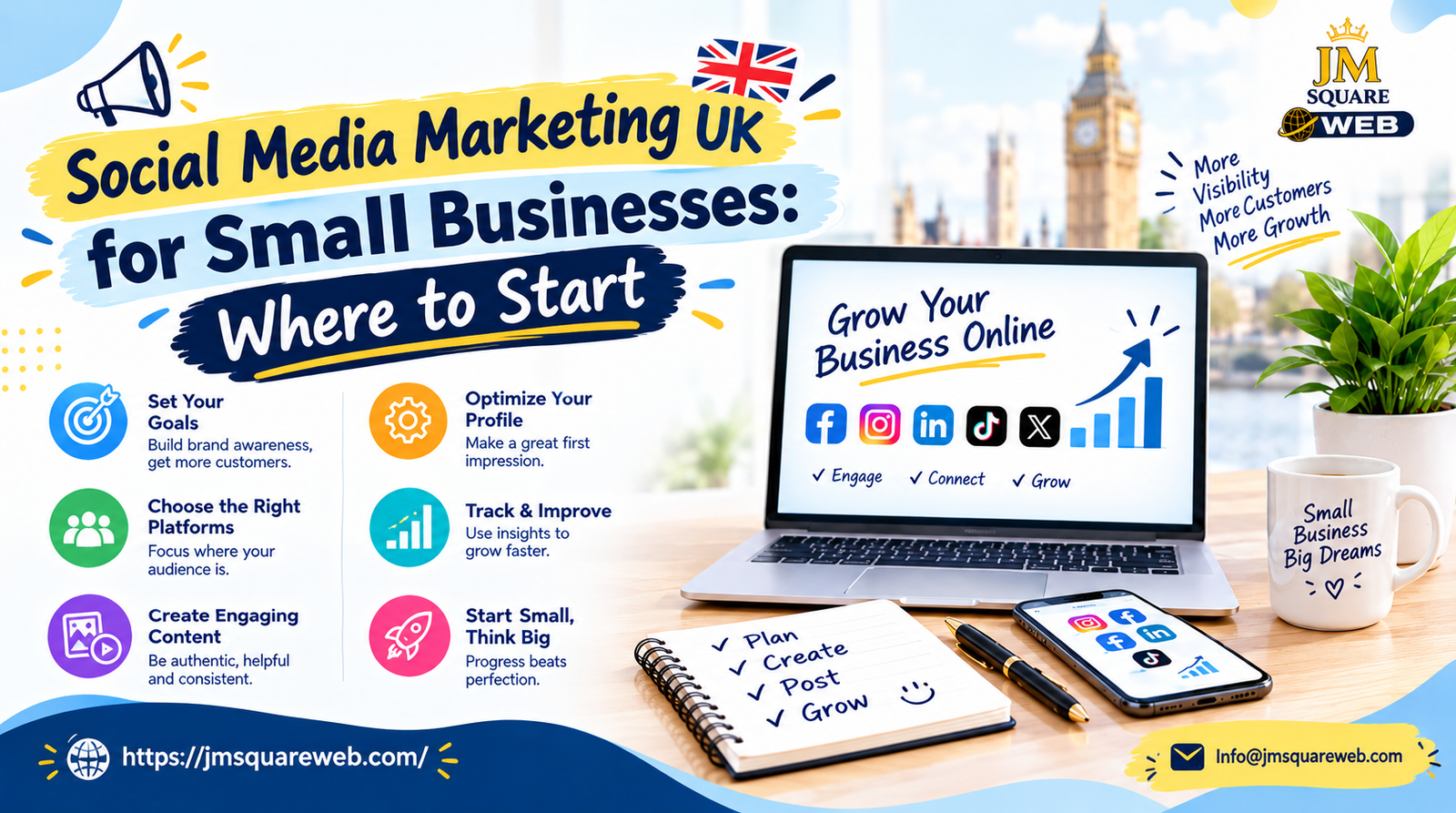
Step 1: Choose One Clear Goal
Most small businesses fail at Social Media Marketing UK campaigns because they want everything at once: followers, sales, reviews, brand awareness. That spreads you thin.
Pick one main goal for the first three months. For example:
- Get more local people to know your business exists
- Drive more enquiries or phone calls
- Send more visitors to your website
- Build a list of email subscribers
A goal like “get 20 new enquiries a month” is far easier to work towards than “grow on social”. It also tells you what to post and what to ignore.
Step 2: Know Who You’re Talking To
You can’t write a good post for “everyone”. Think about one typical customer. How old are they? Where do they live? What problem do they have when they find you? What would make them stop scrolling?
A Swindon plumber and an online jewellery shop have completely different customers, so they shouldn’t post the same way. Spend half an hour looking at your existing customers and your competitors’ pages. Notice which posts get comments and shares. That research costs nothing and saves a lot of guesswork.
Step 3: Pick the Right Platforms (Not All of Them)
You don’t need to be everywhere. Two platforms done well beat six done badly.
- Facebook:Good for local businesses, community groups, events and older audiences
- Instagram:Strong for visual businesses such as food, beauty, retail and interiors
- LinkedIn:Best for B2B, professional services and recruitment
- TikTok:Useful for short, casual video and reaching younger customers
- X:Works for news, customer service and quick updates
Choose based on where your customers already spend time, not where you personally like to scroll. If you’re unsure, start with Facebook and Instagram. They suit most small UK businesses and share a posting tool.
Step 4: Decide What to Post
The most common mistake in Social Media Marketing UK accounts is posting only sales messages. Nobody follows a page just to be sold to every day.
A simple mix works well:
- Helpful posts:tips, how-tos and answers to common questions
- Behind the scenes:your team, your workshop, how things are made
- Proof:customer reviews, before and after photos, case studies
- Offers and updates:new products, opening hours, deals
Aim for mostly helpful and human posts, with the occasional sales one. Short video clips, even shot on your phone, often get more attention than polished graphics. Write like you talk. If a sentence sounds odd out loud, change it.
Step 5: Build a Posting Routine You Can Keep
Consistency matters more than volume. Three good posts a week, kept up for six months, will beat a daily blitz that fizzles after two weeks.
Set aside one hour a week to plan. Write your posts in a batch, schedule them, and then spend ten minutes a day replying to comments and messages. Replying is where relationships form. A fast, friendly answer to a question can win a customer all by itself.
If this sounds like too much, that’s a normal reaction. It’s why many small firms bring in a digital marketing agency to handle the planning and posting while they get on with running the business.
Step 6: Understand Where Paid Ads Fit
Organic posting builds trust slowly. Paid ads speed things up. Facebook and Instagram let you target people by location, age and interests, which is handy if you only serve a small area.
This is where PPC services come in. With pay per click advertising, you pay when someone clicks your ad, so a small budget can still reach the right people. Start with a modest spend, test two or three ads, and keep the one that gets the most enquiries.
Don’t switch ads on before the basics work. If your profile is empty or your website is confusing, ads will just send people to a weak page. Fix the foundation first.
Step 7: Connect Social Media to Your Website and SEO
Social media doesn’t work alone. Your profiles should lead people somewhere useful, and that place is usually your website.
A clear, fast, mobile-friendly site turns social visitors into customers. If yours is outdated, a good website development agency can rebuild it so it matches what you promise on social. Make sure your profile links go to the right pages, not just the homepage.
Social also supports search. Posts themselves don’t directly boost rankings, but active profiles help people find and remember your brand, and that brings branded searches. Good Search Engine Optimisation on your site, supported by SEO services from a trusted SEO agency, makes sure those visitors find what they came for. When your social posts, website and Google Business Profile all show the same name, address and phone number, search tools can trust your details more easily.
Step 8: Track What Matters
Likes feel nice but rarely pay the bills. Look at numbers that connect to your goal.
- Reach:how many people saw your posts
- Engagement:comments, shares and saves
- Clicks:visits to your website
- Enquiries:calls, messages and form fills
- Sales:where possible, track which post or ad led to a purchase
Check these once a month. Ask three simple questions: what worked, what flopped, and what should we do more of? Then change your plan. That small habit is what separates businesses that grow from those that guess.
How Social Media Helps You Show Up in AI Search
Search is changing. People now ask questions to AI tools and see AI-written summaries in Google. These tools lean on pages and profiles that are clear, consistent and trustworthy.
You can help yourself by keeping your business details the same everywhere, answering real customer questions in your posts, and using clear, plain wording in your bios. Short, direct answers to common questions work well for both people and answer engines. Good Social Media Marketing UK habits and clear website content support each other here.
Common Mistakes to Avoid
- Trying to be on every platform at once
- Buying followers, which gives you numbers and no customers
- Posting only offers
- Ignoring comments and messages
- Having no link or call to action
- Giving up after one month
Social media is slow at first. Most businesses need a few months before they see steady results. Stick with it long enough to learn.
Why Small Businesses Choose JM Square Web
JM Square Web is a UK digital marketing agency based in Swindon. The team works with startups, local businesses, e-commerce brands, professional services and restaurants, and has more than eight years of combined experience.
Their Social media marketing service is built around your goals, not a fixed package. They plan content, grow your presence and report in plain English so you can see what’s happening. Because they also handle SEO, PPC, email marketing, e-commerce marketing and website development, everything works together instead of in separate boxes.
As a marketing company with a dedicated account manager for every client, you always know who to speak to. If you want an honest look at where you stand now, ask about their free website audit.
Contact JM Square Web
For a quick chat about your Social Media Marketing UK plans, reach out to JM Square Web:
- Phone:07508 330007
- WhatsApp:me/447508330007
- Email:Info@jmsquareweb.com
- Address:May Close, Swindon, SN2 1XA, United Kingdom
- Website:https://jmsquareweb.com/
Frequently Asked Questions
What is Social Media Marketing UK businesses should start with?
Start with one goal and one or two platforms. Facebook and Instagram suit most small UK businesses. Post helpful content three times a week and reply to every comment. Add paid ads once your basics are working.
How much should a small business spend on social media marketing?
It depends on your goals and whether you do the work yourself. Posting organically costs only your time. Paid ads can start small, and many businesses test with a modest monthly budget. A marketing agency can give you a fixed quote based on what you need.
Is Social Media Marketing UK different from marketing elsewhere?
The tools are the same, but the audience isn’t. UK customers respond to local references, British spelling, UK pricing and delivery details. Content that feels local usually performs better than generic posts.
How long does it take to see results?
Most businesses see early signs, such as more profile visits and messages, within a few weeks. Steady enquiries usually take three to six months of consistent posting. Anyone promising overnight results is not being honest.
Do I need a digital marketing agency for social media?
Not always. If you have time and enjoy it, you can start yourself. But a digital marketing agency saves time, avoids beginner mistakes and links social to your website, SEO and ads. Many small firms hire one once they get busy.
Can social media help my Google rankings?
Not directly, but it helps indirectly. Active profiles build awareness, bring more people to your site and support branded searches. Pair it with solid Digital Marketing services like SEO and a fast website for the best effect.
Final Thoughts
You don’t need a huge budget or a viral video to make Social Media Marketing UK work for your business. You need a clear goal, the right platforms, useful content and the patience to keep going. Start small, check your numbers, and improve a little each month.
If you’d rather hand it over to people who do this every day, contact JM Square Web on 07508 330007 or at Info@jmsquareweb.com.